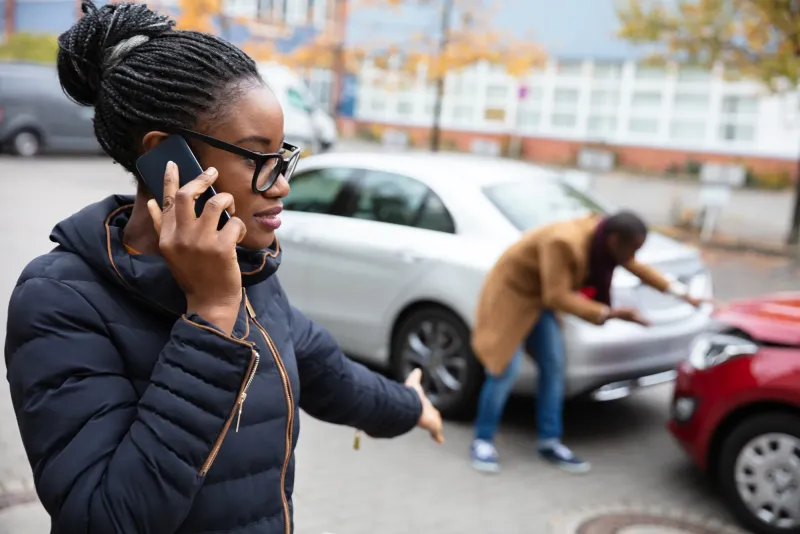
After a fatal car accident, the first decisions a family faces are practical ones: who will speak for the family, how to handle the insurance calls that start almost immediately, and what needs to be preserved. None of these require legal knowledge. They require knowing what matters and what can wait.
This guide covers the decisions specific to fatal crashes. For a broader week-one guide, see.
Decide who speaks for the family
Grief scatters attention, and a family handling calls from five directions will contradict itself without meaning to. Choose one person, or one household, as the point of contact for everything related to the crash: the police, the insurers, the tow yard, and eventually the attorney.
This person does not need to be the closest relative. They need to be the one most able to take notes and say "we will get back to you."
Before you speak with any insurance company
An insurer may call within days, sometimes with condolences and sometimes with a settlement figure. Two things to know:
You are not obligated to give a recorded statement to the other driver's insurance company. Early statements, given in grief and without the full facts, are kept and can be used later, so it is wise to get advice before agreeing to one.
You are not required to respond to any early settlement offer. An offer made before anyone knows the full facts of the crash, the insurance coverage involved, or the family's losses is a number chosen for the insurer's benefit, not yours.
Being polite and being uncommitted are fully compatible. "We are not ready to discuss that yet" is a complete answer.
Preserve the vehicle
The car itself is evidence. It can show impact points and seatbelt use, and many modern vehicles record electronic information about speed and braking in the final seconds before a crash.
Do not let the vehicle be released, repaired, or scrapped until it has been documented. If a tow yard or insurer is pressing about storage fees, have your point of contact note the pressure and get advice before agreeing to anything.
Gather the official records as they become ready
Three documents matter early, and none require urgency from you today:
- The police crash report, which takes time to be finalized. Ask how to obtain it and note the report number.
- The coroner's findings, where the coroner is involved. These also take time.
- The death certificate, which the funeral home typically helps order. Ask for several certified copies, because banks, insurers, and courts each tend to want their own.
If you are worried your family member was partly at fault
Many families carry this fear silently. Louisiana is an at-fault state, and for accidents since January 1, 2026 a family can recover if the person who died was 50% or less at fault, with the award reduced by that share; at 51% or more, there is no recovery. Accidents before that date fall under the old pure comparative fault rule. The practical point: partial fault is a question for evidence, not a reason to stay silent, and the insurer's opinion of fault is not the final word.
The money pressure is real, and there are honest answers
Funerals are expensive and sudden. Some families feel pushed toward a quick settlement simply because costs are arriving. Two honest points:
Funeral and burial expenses are a recognized category of damages in a wrongful death claim, and accepting a fast, low settlement to cover a funeral can cost a family far more than it solves.
Getting advice does not add to the financial pressure. At the Law Offices of Chip Forstall there is no upfront cost and no fee unless we win, so the decision to ask questions is not a financial decision.
The decisions that can wait
You do not need to decide this week whether to bring a claim, and you do not need to understand Louisiana's beneficiary rules yet.
What should not wait indefinitely: in most cases, a wrongful death claim must be filed within one year from the date of death. An early conversation protects your options even if you decide nothing.
When you are ready to talk
Chip Forstall has served New Orleans families for nearly 50 years, and his firm is at 320 North Carrollton Ave, in the same city where the crash happened. The first conversation is free and carries no obligation.
Call 504-483-3400 when you are ready. No upfront cost, no fee unless we win. Se habla español.