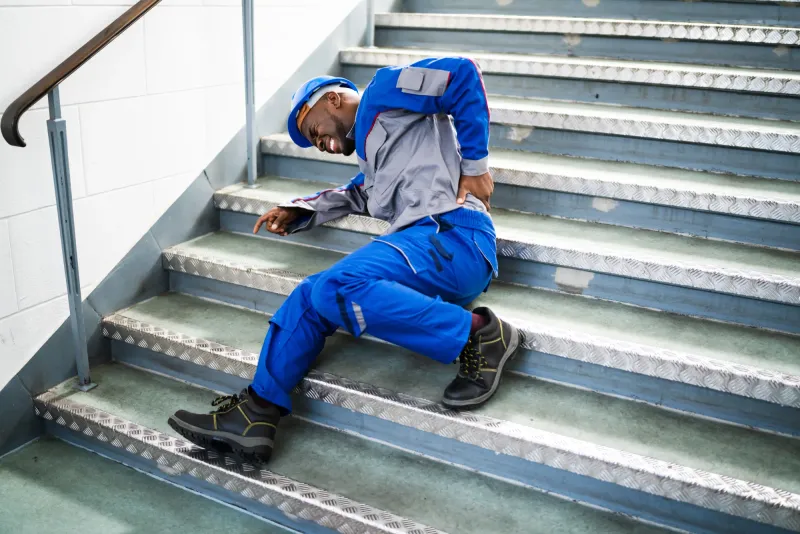
When someone dies on the job in Louisiana, workers' compensation death benefits run on their own separate track, through their own system. But many fatal workplace accidents are caused, in whole or in part, by someone other than the employer, and against those third parties the family may bring a full wrongful death lawsuit.
That second track is the one many families never hear about, and it is often where the real accountability lies. Here is the plain version.
Two tracks, two very different claims
Workers' compensation is a no-fault system. Benefits for a qualifying family do not depend on proving the employer did anything wrong, and they are handled through the compensation system under its own rules and procedures.
The trade-off is that comp benefits are limited by design. They are tied to wages, and they do not compensate the family's grief, the loss of love and companionship, or the suffering of the person who died.
A wrongful death lawsuit is the opposite. It requires proving fault, and in exchange it opens the full range of damages Louisiana law recognizes.
Why the employer usually is not the defendant
Louisiana law generally does not allow a family to sue the employer itself for a workplace death. Workers' compensation is, as the law puts it, the exclusive remedy against the employer in most circumstances.
Many families hear "you cannot sue" and stop there. That is exactly the wrong place to stop, because the rule protects only the employer. It says nothing about everyone else whose choices put a worker in danger.
The third parties who can be held responsible
If anyone other than the employer shares responsibility for the death, the family may bring a wrongful death and survival action against that party under Civil Code articles 2315.1 and 2315.2. Common examples:
- A contractor or subcontractor on a multi-employer job site whose crew created the hazard
- The manufacturer of a machine or safety device that failed
- A property owner who allowed a dangerous condition to persist
- A driver who caused a crash while the person was working, whether in a company vehicle or their own
Construction sites are the clearest example: the general contractor, the crane subcontractor, the equipment lessor, and the site owner may all be separate companies, and none of them is protected by the employer's immunity.
The two tracks run at the same time
A family can generally receive workers' compensation death benefits and pursue a wrongful death lawsuit against a third party at the same time. The two systems interact, and how they interact affects the net recovery, which is one of the things an attorney sorts out when structuring the case. The takeaway for a family is simple: accepting comp benefits does not close the door on a claim against a third party, and the existence of comp benefits does not mean the family has been made whole.
Job sites change faster than any other accident scene
A highway crash scene is photographed and cleared. A job site is rebuilt. Scaffolds come down, equipment is repaired or returned to the lessor, the work continues, and the workers who saw what happened move to other jobs.
Preserving equipment, photographs, and witness names early makes the difference between knowing what happened and accepting a summary of it. Official investigations may occur after a workplace death, but they answer official questions. They do not identify every responsible party, and they do not pursue the family's claim.
On timing: in most cases, a wrongful death claim must be filed within one year from the date of death.
One conversation separates the tracks
Sorting a workplace death into what belongs to the compensation system and what supports a wrongful death lawsuit is exactly the kind of question a first conversation answers. Chip Forstall has served New Orleans working families for nearly 50 years, and his firm can evaluate the claim the family can actually act on.
Call 504-483-3400 for a free case review. No upfront cost, no fee unless we win. Se habla español.